
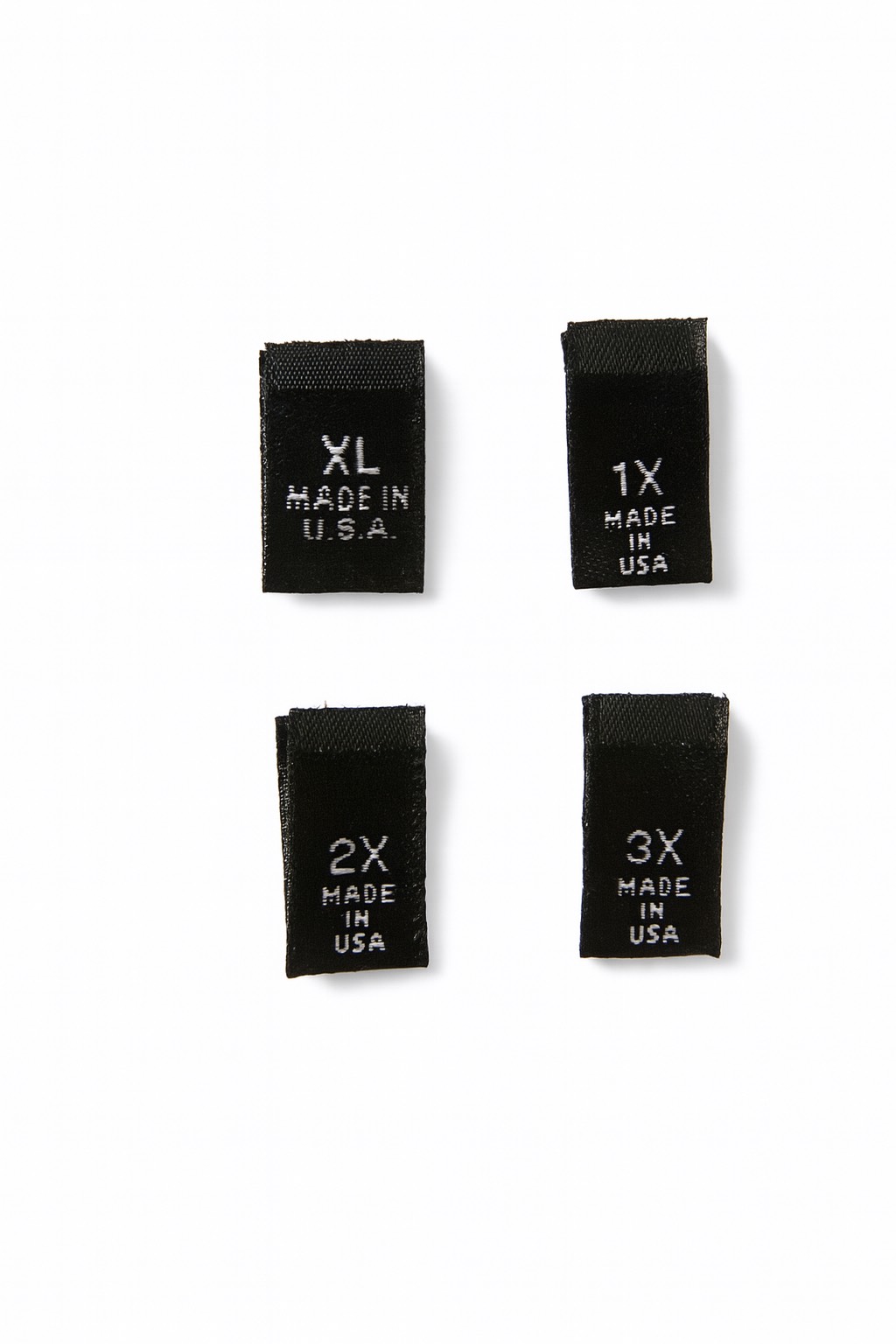
Size labels are small but essential components of apparel. They communicate a garment’s size to consumers, retailers, and internal teams, helping ensure accurate fit, efficient inventory management, and consistent brand presentation.
While often taken for granted, size labels play a critical role in product clarity, customer experience, and operational consistency.
What Is a Size Label?
A size label is a permanent tag attached to a garment that indicates the garment’s size, such as XS, S, M, L, XL, or numeric sizing. Size labels are typically sewn into clothing during manufacturing and remain with the garment throughout its life.
They are most commonly found:
- Inside the neck or collar of tops
- Along the waistband of bottoms
- In the side seam of dresses or outerwear
Why Size Labels Matter
Size labels serve several important purposes:
Clear Communication
They provide immediate size information to consumers, reducing confusion when selecting or wearing garments.
Reduced Returns
Clear, consistent size labeling helps minimize returns caused by sizing uncertainty or misidentification.
Retail and Distribution Standards
Most retailers, distributors, and uniform programs expect garments to include size labels as part of their vendor requirements.
Inventory and Fulfillment Accuracy
Size labels allow warehouse, fulfillment, and retail teams to sort and distribute products correctly.
Are Size Labels Legally Required?
In the United States, size labels are not universally required by federal law in the same way care labels are. However, if a garment is marketed or sold as a specific size, that information must be accurate and not misleading.
In practice, size labels are often required by:
- Retailers and distributors
- Uniform and workwear contracts
- Brand quality standards
As a result, size labels are considered a best practice across the apparel industry.
Common Types of Size Labels
Woven Size Labels
Durable and wash-resistant, woven size labels are commonly used in uniforms, workwear, and garments requiring long-term durability.
Satin Size Labels
Soft and smooth, satin labels are often used in fashion apparel where comfort against the skin is a priority.
Cotton Size Labels
Used for certain natural or specialty garments, cotton labels offer a softer, organic feel.
Where Size Labels Are Placed
Proper placement helps ensure size information is easy to find. Typical placements include:
- Back neck for shirts and tops
- Waistband for pants and skirts
- Side seam for dresses and outerwear
Placement may vary based on garment design and brand standards.
Size Labels vs. Care Labels
Size labels and care labels serve different purposes:
- Size labels identify garment size
- Care labels provide washing and maintenance instructions
Some garments combine size and care information, while others separate them for clarity.
Best Practices for Size Labeling
Professional apparel manufacturers typically:
- Use permanent, sew-in size labels
- Maintain consistent sizing standards across styles
- Choose materials that remain legible after washing
- Place size labels in familiar, easy-to-find locations
Size labels may be small, but they have a big impact on customer satisfaction, operational efficiency, and brand credibility. Clear, durable size labels help clothing brands scale confidently and reduce confusion at every stage of the product lifecycle.
Need size labels for your garments?
Lee Label supplies woven and satin size labels designed for durability, clarity, and large-scale apparel production.
 Lee Label Inc
Leave a comment