
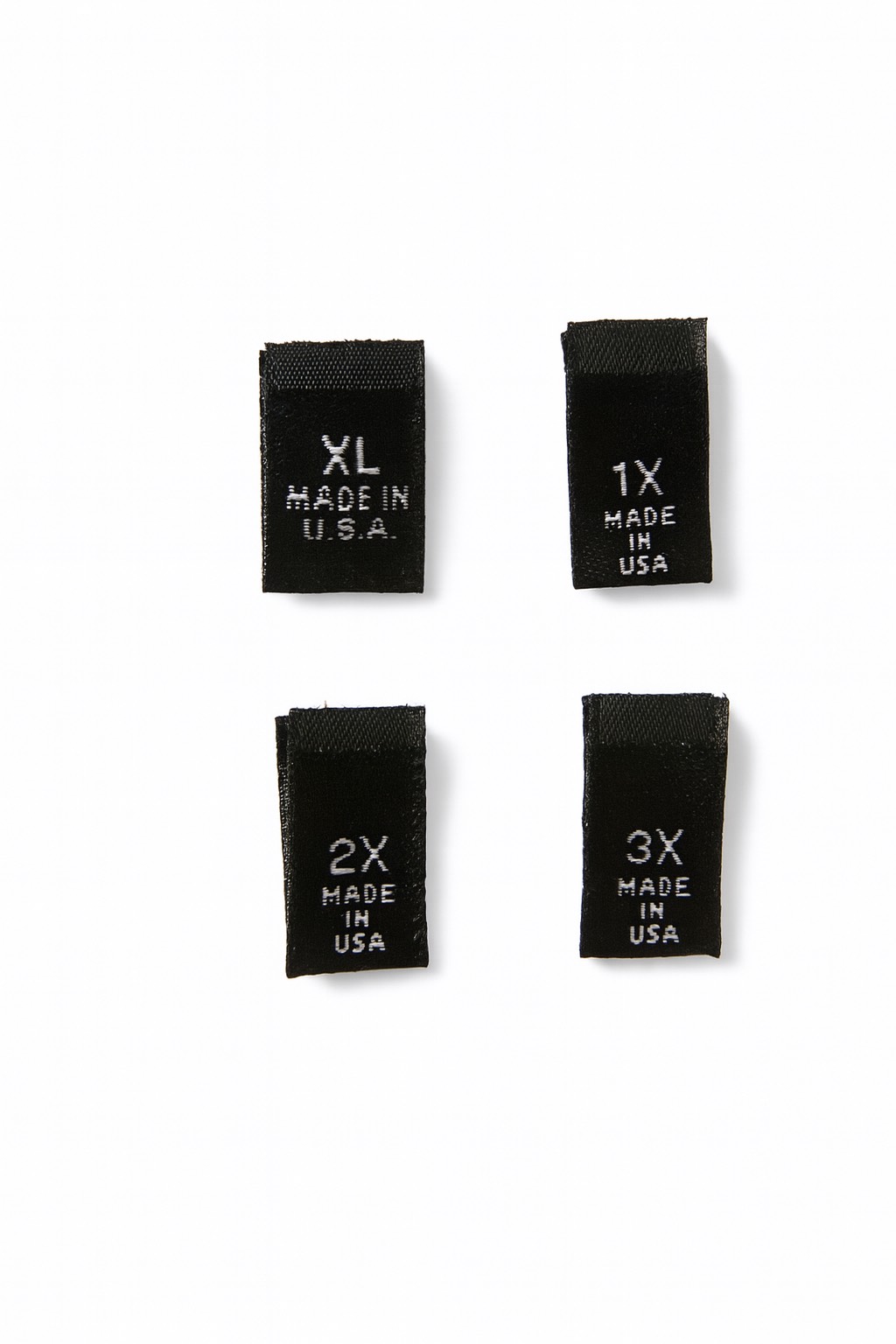
Size labels are one of the most common elements in apparel—but also one of the most misunderstood. Many brands assume size labeling is optional, while others overestimate its legal importance. The reality sits somewhere in between.
This article explains whether size labels are legally required in the U.S., how they relate to compliance, and why most professional apparel programs still treat them as essential.
Are Size Labels Legally Required in the U.S.?
Under U.S. federal law, size labels are not universally mandated in the same way care labels and fiber content labels are. The Federal Trade Commission (FTC) does not require apparel to display a size designation in all cases.
However, that does not mean size labels are irrelevant to compliance.
When Size Labels Become a Compliance Issue
While not always legally required, size labels can become critical in several situations:
1. Retailer and Distributor Requirements
Most major retailers, uniform programs, and distributors require size labels as part of their vendor standards. Missing or inconsistent size labeling can result in:
- Rejected shipments
- Chargebacks
- Delays in distribution
In practice, size labeling is often treated as mandatory in commercial supply chains.
2. Consumer Protection and Misrepresentation
If a garment is marketed, listed, or sold as a specific size, that size must be accurate and consistent. Mislabeling sizes can raise issues related to:
- Consumer deception
- Returns and complaints
- Brand trust
Inconsistent sizing can become a legal and reputational risk, even if a size label itself is not strictly required.
3. Uniforms, Safety Apparel, and Workwear
For uniforms and safety apparel, size labels are often expected as part of fit verification and inventory control. Employers and institutions rely on size labels to ensure proper distribution and compliance with workplace standards.
In these categories, size labels are effectively required to meet buyer expectations and contract terms.
Size Labels vs. Care Labels: An Important Distinction
It’s important not to confuse size labels with care labels.
- Care labels are legally required under FTC rules
- Size labels are often commercially required rather than federally mandated
That said, many brands combine size information with care labels or place size tabs in standardized locations (neck, waistband, side seam) to streamline production.
Why Most Brands Still Use Size Labels
Even when not legally mandated, size labels serve critical operational purposes:
- Reduce returns caused by sizing confusion
- Improve customer experience
- Support consistent quality control
- Meet retailer and distributor standards
- Enable efficient inventory management
For brands producing at scale, omitting size labels often creates more problems than it solves.
Best Practices for Size Labeling
Professional apparel manufacturers typically follow these best practices:
- Use durable, sew-in size labels that withstand washing
- Maintain consistent size standards across production runs
- Place size labels in expected locations (neck, waistband, side seam)
- Align size labeling with brand or retailer requirements
For uniforms and industrial apparel, woven size labels are commonly preferred for durability and longevity.
Final Takeaway
While size labels are not universally required by federal law, they are often essential to staying commercially compliant. Retailer standards, buyer expectations, and consumer protection considerations make size labeling a best practice for most apparel brands.
Brands that plan size labeling early avoid production delays, shipment issues, and downstream confusion.
Need durable size labels for your garments?
Lee Label supplies woven and satin size labels for apparel brands, uniform programs, and large-scale production runs. Bulk pricing and sampling available.
 Lee Label Inc
Leave a comment