Note: We also sell compliance stickers in addition to sew-on labels.
If you’re labeling your products with Proposition 65 (Prop 65) stickers and assuming that’s enough to stay compliant—you may want to take a closer look.
As a Prop 65 compliance specialist, I work with Amazon sellers, FBA prep centers, and private-label brands who are navigating the growing enforcement of California’s strict labeling laws. And one of the most common misconceptions I hear is:
“I slapped a Prop 65 sticker on the package—so I’m covered, right?”
The truth? Not necessarily.
In fact, relying on stickers alone may still leave your business legally exposed—especially if you’re selling apparel, accessories, or any product that gets unboxed or handled before reaching the consumer.
Let’s break down why sew-in Prop 65 labels are the safest, most professional, and most durable way to stay compliant.
🛑 First, What Does Prop 65 Require?
California’s Proposition 65 law mandates that products sold or shipped into California that contain one or more of nearly 900 listed chemicals (such as lead, cadmium, DEHP, or nickel) must include a “clear and reasonable warning.”
This warning must:
- Be conspicuous and legible
- Include a signal word (⚠️ WARNING)
- Name at least one of the chemicals
- Reference the official site: www.P65Warnings.ca.gov
- Be delivered to the consumer before or at the time of purchase
Amazon requires this notice to be visible on the product listing. But Prop 65 law requires it on the physical product or its packaging as well—so that it reaches anyone who comes in contact with it, even if it’s sold in a retail store, reshipped, or unboxed.
🚨 The Problem With Stickers
While stickers are easy and cheap to apply, they come with serious risks:
- They peel off. Stickers can fall off during warehousing, shipping, or unpacking. If the label is missing by the time the product reaches the end user, you’re out of compliance.
- They can be misplaced. If a warning is only on outer packaging that gets removed, the product itself is left unlabeled. A resale or reuse scenario could still expose you to liability.
- They degrade. Heat, humidity, folding, or laundering can cause stickers to wrinkle, smear, or detach.
- They look temporary. Compliance stickers can make your brand look less professional—especially in apparel, fashion, or high-touch consumer categories.
Most importantly, Prop 65 violations can cost you up to $2,500 per day, per violation. That’s not a typo—and Amazon and private enforcement firms are watching.
✅ Why Sew-On Prop 65 Labels Are Safer
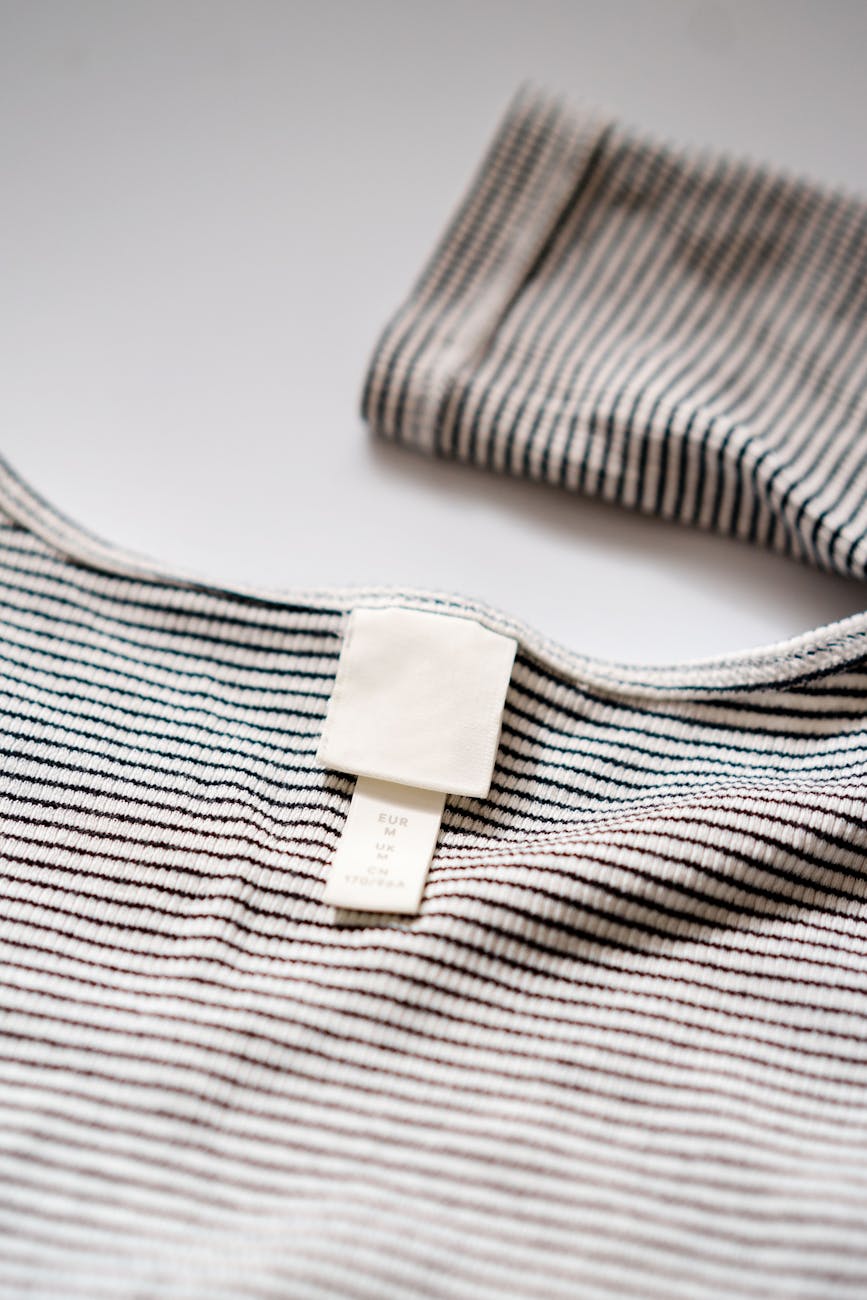
Sew-in labels are the most durable and tamper-proof way to show compliance—especially for textiles and apparel.
Here’s why:
| Feature | Stickers | Sew-On Labels |
|---|---|---|
| Washable | ❌ Often peel off | ✅ Survive laundry cycles |
| Permanent | ❌ Removable | ✅ Physically sewn into product |
| Professional look | ❌ Often look cheap | ✅ Matches garment tags |
| Long-term compliance | ❌ Degrades over time | ✅ Lasts the product’s lifecycle |
| Meets resale/repackaging needs | ❌ Not visible once unboxed | ✅ Always visible to new end users |
🔄 When Do Sew-Ins Make Sense?
Sew-in Prop 65 labels are especially critical if:
- You sell clothing, bags, or fabric-based products
- You work with FBA prep centers or drop shippers
- Your product may be resold, repackaged, or gifted
- You want to build consumer trust with a clean, compliant brand image
Sellers who upgrade to woven sew-on labels not only reduce legal risk, but often see a boost in buyer trust, review quality, and brand reputation.
🛍️ Our Sew-On Labels Are…
- ✅ Pre-printed with required warning, chemical names, and link
- ✅ Woven, washable, and soft to the touch
- ✅ Easy to sew into side seams, collars, or inner tags
- ✅ Available in 100, 500, and 1000-pack quantities
- ✅ Used by Amazon sellers, prep centers, and private-label brands across the U.S.
Stickers May Not Be Enough
Think about it this way: if your sticker falls off in transit, who’s liable?
You are.
Sew-in labels are a small investment that can protect your business from massive fines, listing takedowns, and lost trust.
You’ve worked too hard to build your brand. Don’t risk it all on a sticker.

 Lee Label Inc
Leave a comment